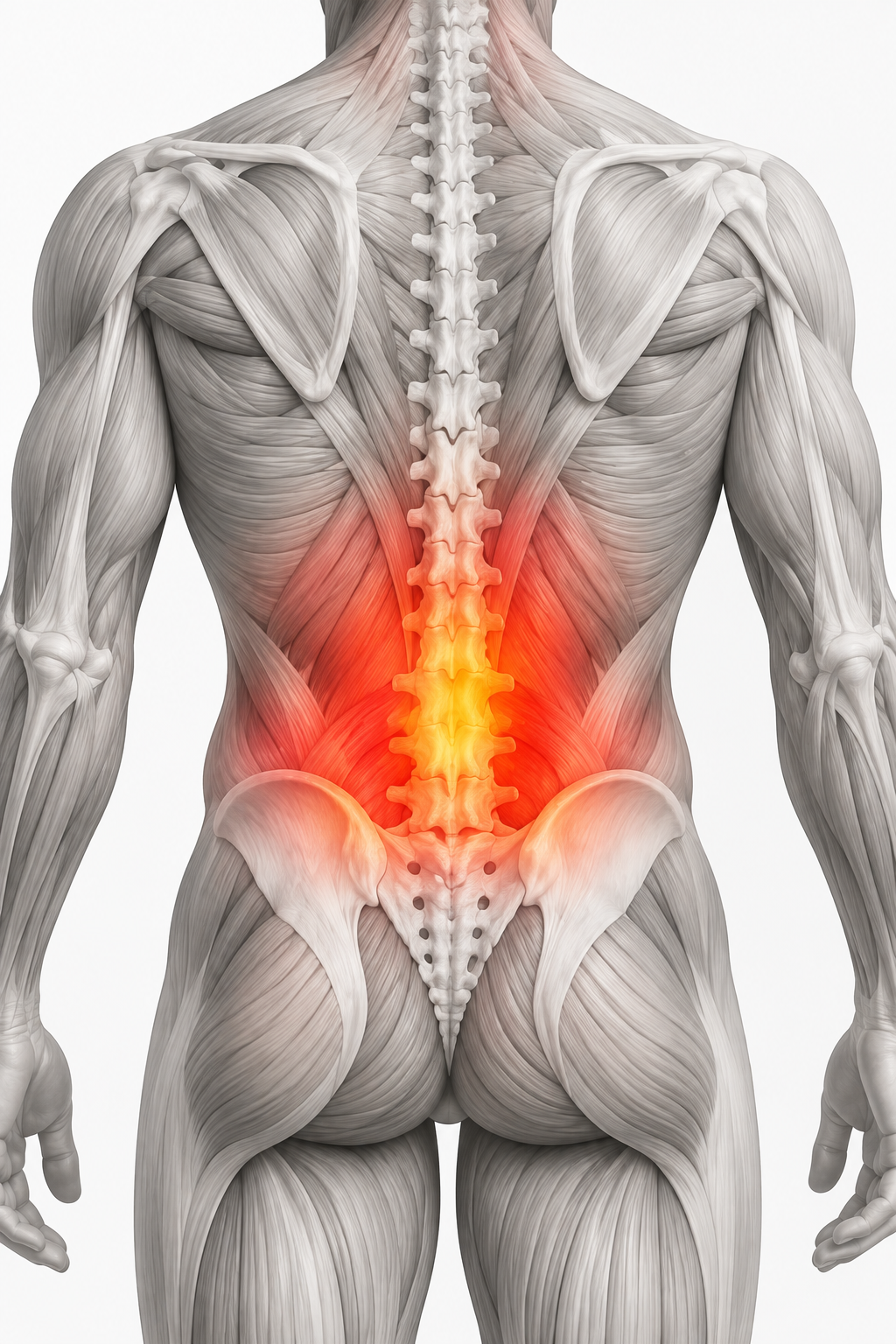
A Different Approach To Lower Back Pain
Lower back pain is one of the most common problems I see in my Milton clinic, and it is also one of the conditions where I believe it is especially important not to rely on hands-on treatment alone.
Massage and other soft tissue techniques can feel good and can be useful for improving movement around the hips and pelvis. But in my experience, persistent lower back pain often does not respond particularly well to repeatedly treating the painful area without also addressing strength, control and loading.
That is why my approach to lower back pain treatment is usually built around assessment and targeted exercise, with hands-on treatment used where it is useful rather than as the entire solution.
Why The Painful Area Isn't Always The Whole Story
People with recurring back pain often spend a long time moving between treatments that temporarily reduce symptoms, only to find that the pain returns. One reason can be that the body has not developed enough strength, stability or movement control to comfortably handle the loads being placed through the lower back.
I look closely at how the hips, pelvis and trunk are functioning. Certain muscles may be underperforming, movement strategies may be inefficient, or the person may simply need to progressively rebuild their tolerance to particular movements and loads.
This does not mean that every episode of back pain has the same cause. Back pain is complex, and the purpose of the assessment is to work out what appears relevant for the individual in front of me.
How I Treat Lower Back Pain
Where appropriate, I may begin with soft tissue treatment, dry needling or other hands-on techniques to reduce tension and improve movement around the hips and surrounding areas. This can make it easier and more comfortable to begin the rehabilitation work.
The main focus, however, is often very specific exercise. I want you to understand what the exercise is trying to achieve, where you should feel it and how to perform it without simply compensating or using momentum.
The exercises may focus on hip strength, pelvic control, trunk strength, stability and gradually improving your ability to tolerate the movements that have been aggravating you. The exact combination depends on your presentation.
For me, the aim is not to give you a generic sheet of back exercises. It is to identify the areas that appear most relevant to your pain and teach you how to train them properly.
What To Expect
As a general guide, four to six sessions is a reasonable expectation for many musculoskeletal pain conditions, including lower back pain. Some cases are simpler and may need less; others are more persistent or complex and may require longer.
The first appointment is about assessing the problem, reducing symptoms where possible and establishing the most useful exercises. As your pain and movement improve, the focus can progressively shift toward strength, control and helping you manage the problem more independently.
Frequently Asked Questions
Can massage fix lower back pain?
Hands-on treatment can be useful for symptom relief and improving movement, but for many recurring lower back pain presentations I prefer to combine it with targeted exercise and strength work.
Will I need to exercise?
Not every person needs the same program, but exercise is commonly an important part of improving persistent back pain. I will show you what to do and, importantly, how to do it correctly.
How quickly should I expect improvement?
This varies. Some people notice a meaningful change early, while others require a gradual process. Four to six sessions is a useful general guide rather than a guarantee.
Book Lower Back Pain Treatment In Milton
If lower back pain keeps returning despite repeated hands-on treatment, a more targeted assessment and exercise-based approach may be worth exploring. Book an appointment and we can work out what your back needs rather than simply treating the painful spot.